
For most Upstate homeowners, a screened porch is the best value if you want bug-free evenings in spring, summer and fall. A four-season room is the right option if you want living space with heating and cooling that’s usable year round. A three-season sunroom sits in between: glass keeps out pollen and rain, but without air conditioning it gets hot in a Greenville July.
The screened porch vs sunroom decision comes down to how you’ll use the space, how much you want to invest, and whether it should count toward your home’s square footage.
Key Takeaways
Here’s the short version.
- Screened porch: the least expensive option, with simple framing, simple permitting and plenty of fresh air.
- Three-season sunroom: lighter framing and single pane glass or vinyl, with no HVAC. Great natural light, but it follows the temperature outside.
- Four-season room: the most expensive option, built like a room addition with insulated walls, energy efficient windows and climate control.
- Square footage: generally only a finished, heated four-season room counts as living space on an appraisal.
- Upstate climate: Greenville-Spartanburg averages a 90.3°F July high and a 32.1°F January low, so hot summers matter more than cold winters.
What’s the Difference Between a Screened Porch, Sunroom and Four-Season Room?
“Sunroom” is the umbrella term for any glass-walled room attached to a house. Sunrooms offer natural light and outdoor views while staying protected from the elements. The real difference between them is insulation and climate control.
Screened Porch
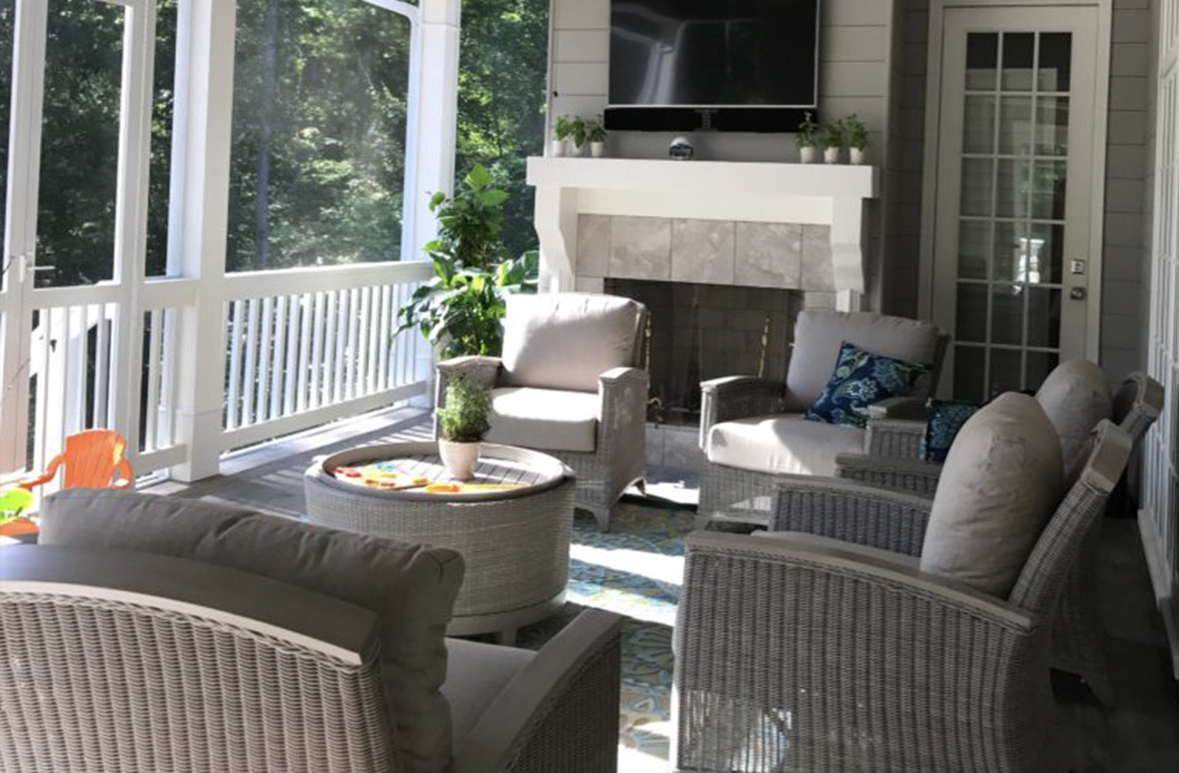
A roofed outdoor space with a screen enclosure instead of walls. It keeps out mosquitoes and leaves, gives shade and rain protection, and lets fresh air through. With no insulation or HVAC, ceiling fans and a fireplace do the work. Simple framing makes it the fastest to build.
Three-Season Sunroom
A three-season sunroom swaps the screens for a glass enclosure or vinyl panels. Lighter framing materials, often single pane glass, and no tie-in to your home’s HVAC mean a three-season room costs less than a four-season sunroom. Prefab kits and patio enclosures sit at the simple end. Think of it as a fully enclosed porch built for seasonal use.
Four-Season Room (Insulated Sunroom)
A four-season room is built like the rest of the home: insulated walls and roof, a permanent foundation, and heating and cooling from your existing system or a ductless mini-split (usually the better choice for one room). Energy efficient windows with advanced glass options, such as double or triple pane low-E glass, keep large windows comfortable. It’s additional living space that should feel like any other room.
How the Building Code Sorts Sunrooms
The residential code defines a sunroom as a one-story structure with glazing over 40% of the gross area of its exterior walls and roof. Under the AAMA/NPEA/NSA 2100 standard, Categories I through III are unconditioned (a screened, plastic or glass enclosure), Category IV is conditioned but thermally separated from the house, and Category V is open to the house.
Side-by-Side Comparison
Build times are national estimates once permits are in hand.
| Factor | Screened porch | Three-season sunroom | Four-season room |
|---|---|---|---|
| Best seasons here | Spring, summer and fall | Spring, fall and mild winter days | Year round |
| HVAC and insulation | None; ceiling fans | None; fans or a space heater | Insulated, with heating and cooling |
| Counts as living space | No | No | Usually, if finished and heated |
| Permit complexity | Lowest | Moderate | Highest; reviewed like an addition |
| Build time | 4–6 weeks new; 2–7 days to screen an existing porch | 2–4 weeks | 6–12 weeks |
How the Upstate Climate Changes the Choice
Most sunroom advice is written for cold winters. National Weather Service climate normals for Greenville-Spartanburg show an average July high of 90.3°F and an average January low of 32.1°F. Freezes happen, but heat and humidity drive the sunroom decision here.
Summer Is the Real Test
A screened porch handles hot summers well. A three-season sunroom is the opposite: shut the windows on a sunny July day and the glass will create a greenhouse. Here, a three-season room is really a spring, fall and mild-winter room. Keeping it comfortable in August with the windows closed takes cooling, and then you’re most of the way to a four-season room.
Storms, Mosquitoes and Pine Pollen
Long, humid warmer months mean a long mosquito season, so screens prove their worth all summer. In a heavy thunderstorm, though, wind drives rain right through them. Then there’s pollen: Clemson’s Home and Garden Information Center notes that pine pollen coats everything across the South from late March through April, and Greenville and the Upstate get a full share. Screens stop bugs, not pollen. That’s where the benefits of a three-season sunroom show: close the windows and you get real protection.
HVAC, Insulation and Square Footage
What Appraisers Count
Appraisers measure gross living area (GLA) using the ANSI Z765 standard that Fannie Mae requires: finished, above-grade space, accessible from the home, with at least a 7-foot ceiling and a permanent heating system. A plug-in space heater doesn’t count. A screened porch or three-season sunroom is noted as a feature, not living space. A permitted four-season sunroom with permanent climate control usually counts.
Property Taxes
Adding conditioned square footage may also lead to a property tax reassessment. Check with your county assessor’s office before you build.
Permits, Construction and Upkeep
A four-season sunroom addition is a major build, with footings, full framing, insulation, electrical and HVAC. A screened porch uses simpler framing and simpler permitting, but any porch or sunroom normally needs a permit. In unincorporated Greenville County, permits go through the Codes Enforcement Division. Our guide to South Carolina building permits and HOA rules also covers HOA approval.
Foundations and Red Clay
Foundations hide a lot of the difference between the three. A screened porch or three-season room can sometimes sit on piers or an existing slab, while a four-season room needs footings and a floor system like the rest of the home. Our red clay holds water and moves, so grading and gutters matter. Published estimates put permitting at 1 to 4 months, and a complete four-season room at 4–6 months overall.
Maintenance
Sunrooms need regular maintenance: clean the glass, check the window seals and service the mini-split. A screened porch mostly needs screen repairs and a spring hose-down. Plan for both.
Resale Value: What You Get Back
A four-season sunroom addition generally returns more at resale than a three-season room because it can count as living space. Potential buyers tend to see a three-season sunroom as a lifestyle upgrade rather than a necessity.
Custom designed rooms that match the roof pitch, siding and trim look like they belong, and unpermitted rooms can slow a sale. If you plan to stay a while, build the sunroom or porch you’ll use.
How to Choose the Right Room
Start with how you’ll use the space:
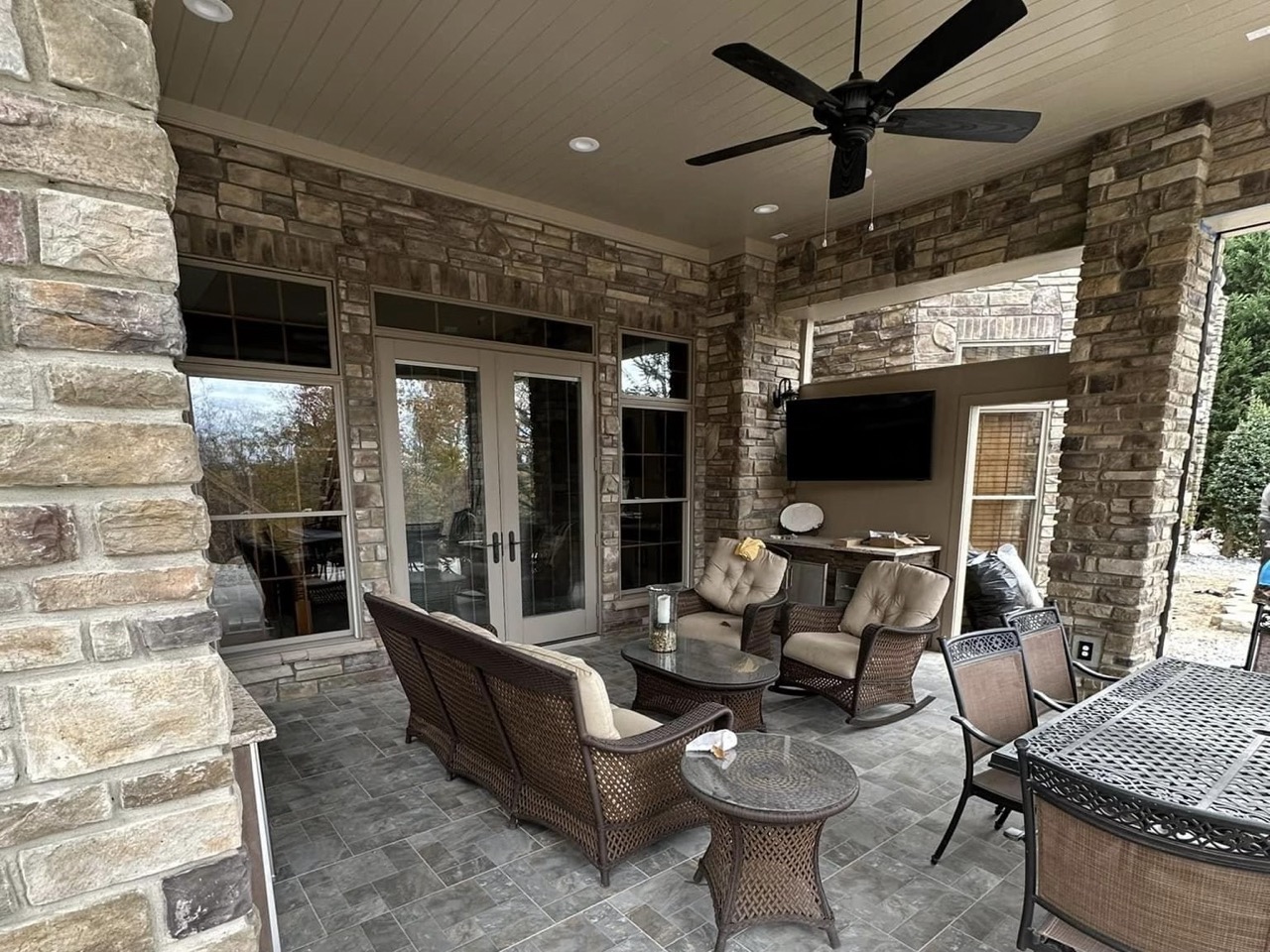
- Choose a screened porch for dinners and evening TV with fresh air and no bugs.
- Choose a three-season sunroom (or one of the simpler patio enclosures) if pollen and blowing rain bother you and you want natural light and outdoor views most of the year without HVAC.
- Choose a four-season sunroom if you’re committed to year round usability and want to create additional space for an office or den.
- Consider a covered patio if you want shade for a grill and bugs aren’t an issue.
Many homes mix outdoor living spaces: a screened porch off the kitchen, a covered patio by the pool. If a four-season sunroom addition starts to sound like a den, compare it with a traditional home addition; a conventional room addition gives you more wall space and privacy.
Converting an Existing Deck or Porch
Screening an existing porch with a solid roof, posts and floor is often a few days of work. An existing deck usually needs new footings, posts and beams before it can carry a roof. Upgrading a three-season sunroom to a four-season sunroom means new glass, insulation, HVAC and an energy code review, so if you might want that later, build the foundation for it now. We plan additions and room conversions that way.
FAQ: Screened Porches, Sunrooms and Four-Season Rooms
Is a sunroom or screened porch cheaper?
A screened porch is almost always cheaper. A three-season sunroom costs more, and a four-season room costs considerably more because of insulation, glass, foundation work and HVAC. Our post on ways to finance a home renovation in South Carolina covers paying for bigger projects.
What is the difference between a four season room vs sunroom?
“Sunroom” covers any glass-walled room attached to a home. A four-season room is a sunroom built for year-round comfort, with insulated walls, insulated glass and heating and cooling.
Can I use a three-season sunroom year round in South Carolina?
More than you could up north. In mild climates like ours, a space heater in the sunroom handles many winter days that would be off-limits in places with extreme temperatures. Summer is what limits year round use here: a closed glass sunroom gets very hot without air conditioning.
Talk to a Local Builder About Your Project
Productive Builders builds screened porches, covered patios, sunrooms and full home additions for outdoor living across Greenville, Anderson and Pickens counties and the surrounding Upstate. We’ll walk your site, look at how the sun hits the back of your house, and help you pick the room that fits how you live.
Call us at (864) 608-2600 or reach out through our contact page to set up a free consultation.
