

Planning a bathroom renovation can feel overwhelming when you don’t know what to expect. Whether you’re updating a dated powder room or gutting a primary suite, understanding realistic timelines helps you prepare your household, coordinate with contractors, and avoid frustration. This guide is for homeowners planning a bathroom remodel, whether you’re tackling a small powder room or a full primary suite. This guide breaks down exactly how long your bathroom remodel project will take, from first design meeting to final walkthrough.
Key Takeaways
Most homeowners wonder how long a bathroom remodel takes, and the answer depends heavily on scope. Here’s what you need to know upfront:
- A full bathroom remodel typically requires 3–6 weeks of active construction, with 6–10 weeks total when you include planning, permits, and material ordering.
- Cosmetic refreshes (replacing fixtures, new paint, flooring) take just 3–10 days of construction work, while standard updates run 3–4 weeks, and full gut remodels with layout changes stretch to 6–10+ weeks.
- The pre construction phase—design, quoting, permits, and ordering materials early—adds 3–5 weeks before demo starts, even for smaller projects.
- Four factors most commonly extend timelines beyond expectations: older homes (pre-1980), custom materials with long lead times, permit delays from busy local building departments, and mid-project design changes.
Now, let’s look at the typical timeframes for different types of bathroom remodels so you can set realistic expectations for your project.
Typical Bathroom Remodel Timeframes
Below is a summary of how long different types of bathroom remodels usually take, including both construction and planning phases:
| Remodel Type | Typical Timeline (Including Planning) |
|---|---|
| Cosmetic updates (paint, fixtures, flooring) | A few days to 1 week |
| Small/simple remodel (powder room facelift) | 1–2 weeks |
| Standard bathroom update | 3–4 weeks |
| Full bathroom remodel (hands-on construction) | 3–6 weeks |
| Full gut remodel (layout changes, complex) | 4–6+ weeks |
| Major/complex/master bath renovation | 3–5+ weeks or longer |
| High-end/luxury master suite | 2–3 months or more |
| Custom/extensive changes | 8–12+ weeks |
| Full, high-end renovation (with planning) | 6–10 weeks or longer |
| Most bathroom remodels (general range) | 3–8 weeks |
Note: The entire renovation process, including planning, design, material ordering, and permitting, can stretch to 6–10 weeks or longer for larger or custom projects.
Now, let’s look at the phases of a typical bathroom remodel and how each stage affects your timeline.
Bathroom Remodel Phases & Typical Timeline
The bathroom remodeling process typically involves three main phases: pre-construction, construction, and post-construction. Each phase includes specific steps that contribute to the overall timeline:
- Pre-construction: Planning, design, permits, and ordering materials.
- Construction: Demolition, rough-ins, installation, and finishing work.
- Post-construction: Final inspections, punch-list completion, and walkthrough.
Understanding these phases helps you see why a project that seems simple still takes several weeks. Each phase depends on the previous one. Inspections must pass before walls can close. Tile must cure before vanity installation. A small bathroom like a 3’ x 6’ powder room compresses these phases into days, while a full primary bath stretches them across weeks.
The days listed below are typical, assuming readily available materials and no major surprises behind the walls.
Planning & Design (1–3 weeks)
This phase covers layout decisions, fixture selections, tile choices, lighting locations, storage needs, and ventilation planning. Expect 2–3 meetings or design iterations with your contractor or designer.
- Simple cosmetic update using in-stock products: about 1 week
- Full redesign with 3D renderings and multiple options: 2–3 weeks
A good design package should include a measured floor plan, elevations, a fixture list with model numbers, and a preliminary schedule. Decisions made here—like moving plumbing for a toilet versus keeping it in place—have the biggest impact on your construction phase timeline.
Finalize as many selections as possible now. Choosing materials during construction leads to delays.
Permits & Approvals (1–2 weeks)
Most cities require permits for new plumbing lines, moving drains, structural modifications, or adding circuits and GFCI outlets. Check with your local building department early.
- Simple over-the-counter permits: 1–3 business days
- Complex plans with local building codes review: 1–2 weeks depending on backlog
Skipping permits can lead to failed inspections at resale, fines, and having to open walls later. A good contractor handles permit applications and coordinates required inspections into the schedule. In busy metro areas, city permits alone can add a full week to your timeline.
Ordering Materials (2–6 weeks, often overlapping)
This phase often overlaps with permitting and can start as soon as your product list is finalized.
Lead time examples:
| Item | Typical Lead Time |
|---|---|
| In-stock toilets, faucets, basic tile | A few days |
| Stock bathroom vanity | 1–2 weeks |
| Custom vanities, stone tops | 4–6 weeks |
| Special-order glass enclosures | 4–6 weeks |
Many delays occur because a critical item—like a shower valve, shower door, or tile trim—was not ordered early or went on backorder. Have 90–95% of materials on site or confirmed with delivery dates before demolition starts.
Supply chains have improved since pandemic years, but imported or custom items still extend timelines.
Transition: With pre-construction complete, your project moves into the active construction phase, where the bulk of the hands-on work takes place.
Active Construction: Week-by-Week Breakdown
This is the period from first day of demolition until your new bathroom is usable again—usually 3–6 weeks for a full remodel. The following breakdown covers a typical 4-week schedule for a standard 5’ x 8’ bathroom. Larger or more complex baths scale from this baseline.
Some days will be “quiet” on site while thinset, grout, or paint cures. They still count toward your calendar timeline.
Week 1: Prep, Protection, and Demolition (2–5 days)
- Pre-construction walk-through: Contractor reviews the plan, confirms access routes, discusses dust control, and answers last-minute questions (Day 1).
- Jobsite protection: Install floor coverings, zipper doors, plastic walls, and vent covers to contain dust (0.5–1 day).
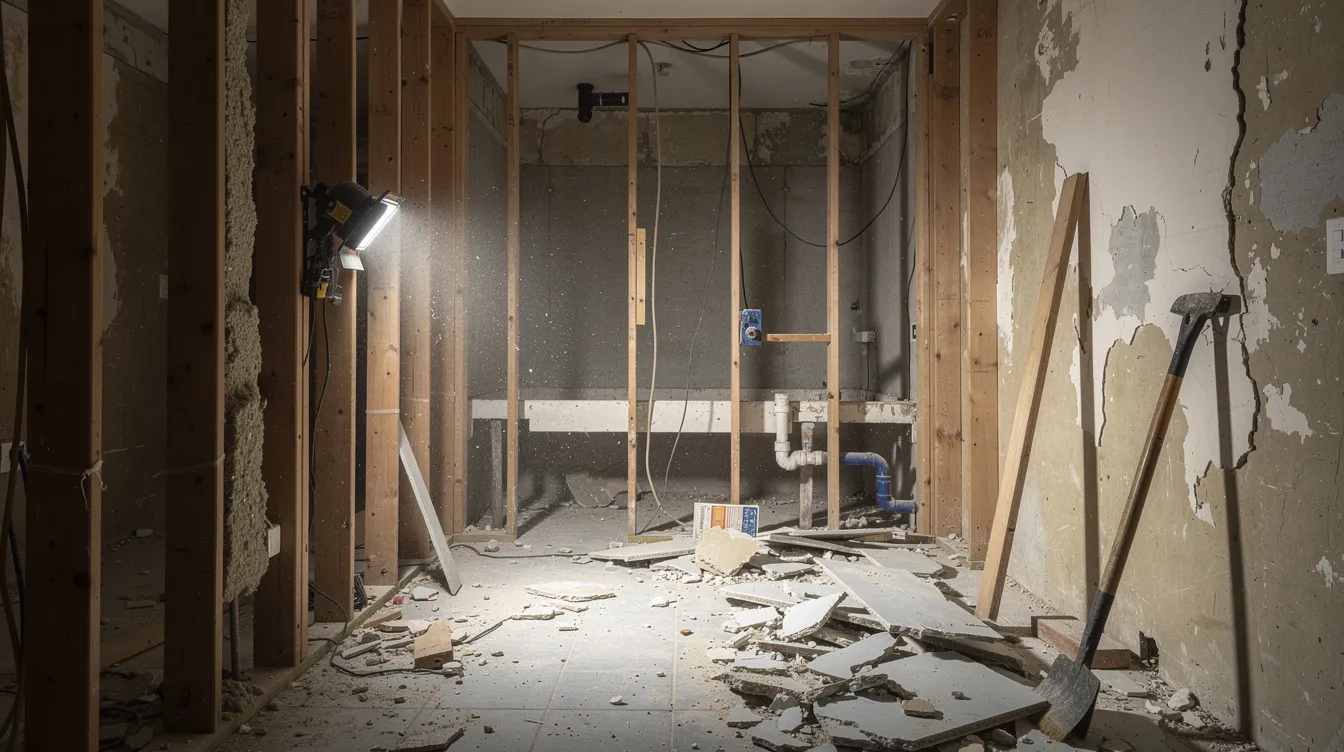
- Demolition: Remove old tile, tub or shower, vanity, flooring, and drywall where needed, then haul debris away (1–3 days).
- Older bathrooms with mud-set tile and plaster walls take longer to demo than newer drywall and backer board.
- This week may also reveal hidden issues like rotten subfloors, outdated wiring, or unvented fans—discoveries that can alter your upcoming schedule.
Week 1–2: Rough-ins for Plumbing, Electrical, and Framing (3–7 days)
- Plumbing and electrical rough-ins: Move drains, supply new water lines, add circuits, and install blocking for grab bars or glass.
- Same-layout remodel: 2–4 days
- Layout changes: 4–7 days
- Minor framing adjustments: Build shower niche, pony wall, or curbless shower slope.
- Rough-in inspection: City inspection required before insulation and drywall installation (may add 1–3 days).
Week 2: Insulation, Drywall, and Shower Waterproofing (3–5 days)
- Insulation: Install in exterior walls (and sometimes interior walls for sound control)—usually half a day.
- Drywall: Hang, tape, and mud drywall (or install cement backer board in wet areas) (1–3 days including drying time).
- Waterproofing: Apply membrane system or liquid-applied waterproofing to shower pan and surround (1–2 days including curing).
- Some jurisdictions require inspections for shower pans or liners, adding another day.
Week 3: Tile, Flooring, and Major Surfaces (4–7 days)
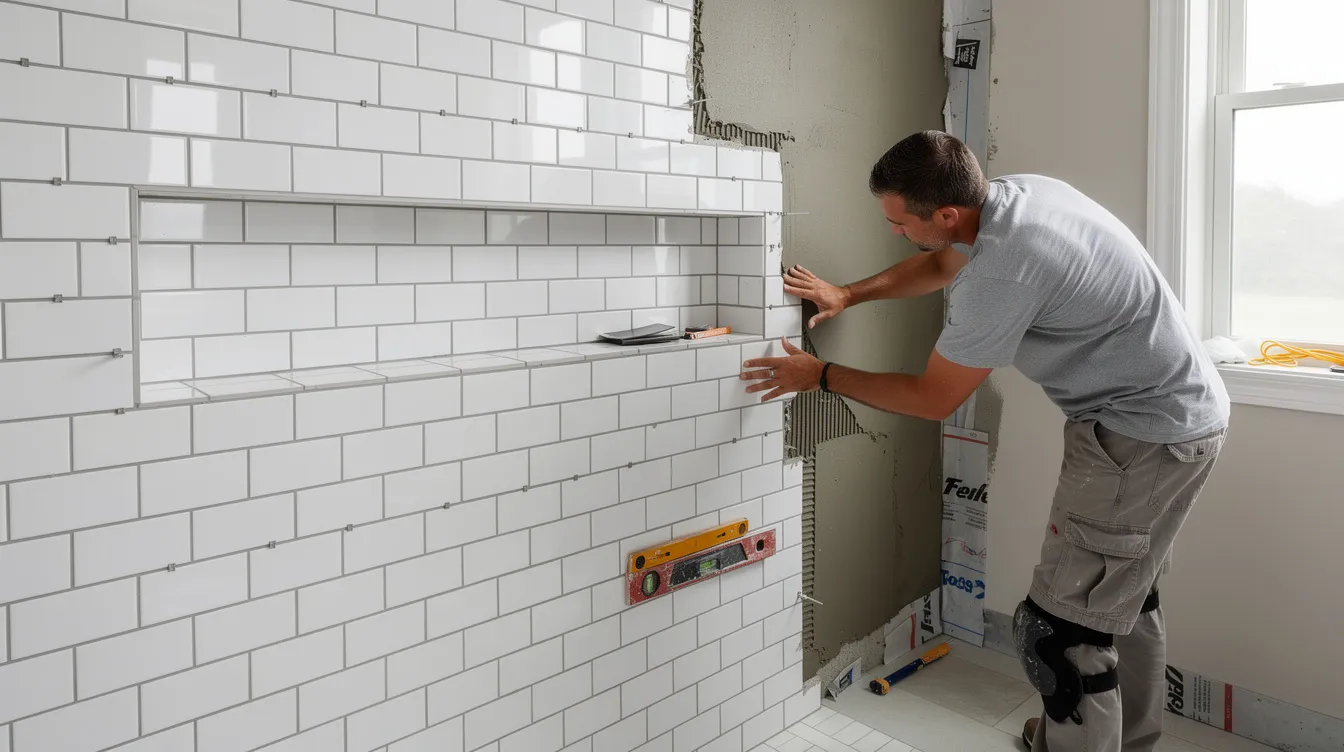
- Tile installation: Set shower wall tile, shower floors, and tile flooring or other flooring.
- Simple large-format wall and floor tile: 3–4 days
- Mosaic floors, niches, and pattern layouts: 5–7 days
- Grout application: Allow 24–48 hours to cure, then seal grout.
- Countertop templating: Stone or quartz countertops for a new vanity may be templated at the end of tile work and installed 5–10 days later.
Week 4: Fixtures, Trim, and Final Touches (3–6 days)
- Fixture installation: Install bathroom vanity, countertop, sink, faucet, toilet, shower fixtures, towel bars, mirrors, and light fixtures (2–3 days).
- Painting: Complete wall and ceiling painting and touch-ups (1–2 days).
- Finish carpentry: Install baseboards, door and window trim, caulking, and any built-in shelving.
- Final inspections: Electrical and plumbing inspection may add 1–2 days.
- Punch-list: Address minor items before final walkthrough.
Transition: Now that you know what to expect week by week, let’s compare timelines for different types of bathroom remodels and project scopes.
Timeline by Project Scope and Bathroom Type
Not all bathrooms are the same. A powder room with no shower remodels much faster than a primary suite with custom tile work and frameless glass. Below are common project types mapped to realistic timeframes, assuming materials are on hand.
Bathroom Remodel Timeline Comparison Table
| Project Type | Typical Timeline (Construction Only) | Typical Timeline (Including Planning) |
|---|---|---|
| Cosmetic powder room facelift | 3–10 days | 1–2 weeks |
| Standard hall bathroom update | 3–4 weeks | 4–6 weeks |
| Full gut remodel with layout changes | 4–6+ weeks | 6–10+ weeks |
| Custom/high-end primary bath | 6–10+ weeks | 8–12+ weeks or more |
| Luxury master suite with custom features | 8–12+ weeks | 2–3 months or more |
Powder Room Facelift (3–10 days)
- Scope: New vanity, faucet, mirror, light fixtures, new paint, and possibly a new toilet or LVP flooring. No plumbing or electrical relocation.
- If everything is in-stock and work is consecutive: 3–5 days
- With inspections, drying times, or weekends: up to 10 days
Permits might not be required if no new circuits or plumbing changes are made. Even a simple facelift needs lead time for ordering the vanity and mirror if they’re not off-the-shelf.
Standard Hall Bathroom Update (3–4 weeks)
- Scope: Typical 5’ x 8’ layout with tub/shower combo, toilet, and single vanity—keeping the same locations but updating all fixtures and finishes.
- Construction timeframe: About 3–4 weeks once demo starts, assuming a tile tub surround, new floor, stock vanity, and basic electrical updates.
This category requires permits for plumbing and electrical but rarely involves structural work, so inspections are simpler. Delays typically come from special-order tubs, shower doors, or countertops. Order these in the planning phase.
Full Gut Remodel with Layout Changes (4–6+ weeks)
- Scope: Room stripped to wall studs, plumbing rerouted, tub replaced with custom shower, lighting and fan locations changed.
- Construction timeframe: 4–6+ weeks due to extra rough-in work, more inspections, and complex tile layouts.
Structural changes—like moving a wall or enlarging a window—add engineering review, framing, and inspection steps. Older homes and second-floor baths often fall into this category because upgrades to framing, subfloor, and venting are common.
Custom, Aging-in-Place, or High-End Primary Bath (6–10+ weeks)
- Scope: High-end projects with curbless showers, heated floors, custom cabinetry, smart controls, and frameless glass.
- Timeline: 6–10+ weeks total, with much of this added time coming from design refinement, product lead times, and specialty labor.
Transition: Several factors can speed up or slow down your bathroom remodel. Let’s explore what can impact your timeline and how to plan for it.
Factors That Can Speed Up or Slow Down Your Bathroom Remodel
Even with careful planning, real-world factors can add 1–3 weeks to a successful remodel. Some are within your control; others require flexibility.
Scope of Work: Cosmetic vs. Structural
The more items you move (toilet, tub, shower drain, walls), the longer the timeline due to plumbing, framing, and inspection requirements.
- Cosmetic project (everything stays put): Baseline timeline
- Relocating shower, adding second sink, or opening a wall: Add 1–3 weeks
Simplifying the design—keeping the existing layout—shaves days off both rough-in and inspection phases. Prioritize which changes are “must-have” versus “nice-to-have” when your schedule is tight.
Home Age and Existing Conditions
Homes built before 1980 often contain galvanized or cast iron plumbing, knob-and-tube or aluminum wiring, and non-insulated walls requiring upgrades.
- Discovering mold, rotten subfloors, or undersized framing during demo typically adds a few days to a week for remediation.
- Asbestos or lead paint require certified abatement, potentially adding 1–2+ weeks.
Plan a contingency of 10–20% extra time for older-home projects.
Permit, Inspection, and Labor Availability
- Busy building departments may schedule inspections several days out, especially in growing metro areas.
- Trades like licensed plumbers, electricians, and tile setters book out weeks ahead, so rearranging schedules after unexpected delays is difficult.
- Holidays and peak seasons (spring and early summer) stretch both permit and labor availability by a week or more.
Material Choices and Backorders
- Custom or imported items—European faucets, special-order tubs, bespoke glass enclosures—carry the highest risk of shifting lead times.
- Even common items can go on backorder. Having second-choice options ready keeps projects moving.
- Confirm ship and delivery dates for tile, vanity, countertop, and shower glass before locking in a start date.
Decision-Making and Change Orders
- Slow responses to contractor questions (grout color, trim style, mirror size) cause trades to pause and move to other jobs.
- Making major design changes after construction work begins—switching tile patterns or moving a light—means re-doing completed work, adding cost and days.
Transition: With these factors in mind, here are some practical tips to help keep your bathroom remodel on schedule.
Tips to Keep Your Bathroom Remodel on Schedule
While not everything can be controlled, predictable steps minimize the risk of a drawn-out project. These tips apply whether you hire a general contractor or coordinate separate trades yourself.
Finalize Design and Selections Before Demo
- Choose tile, vanity, new fixtures, paint colors, and layout before the first wall opens.
- Review a product list with model numbers and quantities with your contractor.
- Locking in selections early allows contractors to line up trades confidently.
Have Materials on Site or Confirmed
- All long-lead items—shower valves, new tiles, bathroom vanity, fan—should either be stored on site or have firm delivery dates at least a week before needed.
- Create a dedicated staging area (garage, spare room) for crews to work efficiently.
Maintain Clear, Regular Communication
- Weekly or twice-weekly check-ins during construction help review progress and discuss upcoming decisions.
- Stay reachable by phone during working hours so crews can resolve questions without losing a day.
Prepare Your Household for the Disruption
- If you have only one bathroom, arrange temporary options—neighbor’s shower, gym membership, or portable solution—for 3–4 weeks.
- Clear the bathroom, hallway, and a path to the exterior before demo day.
Transition: Still have questions about bathroom remodel timelines? Check out the FAQ below for answers to common concerns.
FAQ: Bathroom Remodel Timelines
These questions address common timing concerns not fully covered above, especially about specific living situations and planning.
Can I live in my home during a bathroom remodel, and does it affect the timeline?
Most homeowners stay in their homes during a bathroom renovation. For houses with multiple bathrooms, it usually has little impact on schedule. In one-bath homes, crews may compress noisy or water-off work into shorter windows, which can lengthen the overall calendar by a few days. Staying elsewhere for the first week (demo and rough-ins) can allow longer work days and sometimes shorten the timeline slightly.
How long will I be without a working toilet or shower?
In a full remodel of the only bathroom, the toilet is often out of service for 3–10 days and the shower or tub for 2–4 weeks, depending on scope. Some contractors can temporarily reinstall a toilet in evenings during early phases, but this isn’t always possible once flooring installation or tile work begins. Ask your contractor for a specific “no-plumbing” date range during planning so you can make arrangements.
Do bathroom remodels usually run over schedule?
It’s common for remodels to run 3–10 days over the initial estimate due to inspections, backorders, or hidden damage. Detailed planning, ordering materials early, and quick decision-making significantly reduce major overruns. Ask your contractor how they handled schedule overruns on recent projects and whether they build contingency into timelines.
Is a DIY bathroom remodel faster or slower than hiring a pro?
A diy bathroom project is usually slower in calendar time because homeowners work evenings and weekends with learning curves on each task. A professional crew completes a standard hall bath in about 3–4 weeks, while a DIYer might take several months of part-time effort. Combining DIY cosmetic work (painting, replacing fixtures) with professional plumbing and electrical can balance time savings with safety and code compliance.
When is the best time of year to schedule a bathroom remodel?
Bathroom remodels work year-round, but spring and early summer are busiest, extending wait times for contractors and inspections. Scheduling in late summer or fall may offer more flexible start dates, though holidays in November and December complicate timelines. Book several months ahead if you need the project finished before a specific event.
A successful remodel combines a clear vision, careful planning, and realistic timeline expectations. In a perfect world, every project runs smoothly—but even with unexpected delays and unexpected expenses, proper preparation keeps your daily routine disruption to a minimum. Stay flexible, plan ahead, and your old bathroom will become the new bathroom you’ve been dreaming about.
